
Tanzania, Africa
ADULT CARDIAC SURGERY MISSION (Emphasis: Aortic Surgery)
DAR ES SALAAM, TANZANIA AFRICA
Arrival: October 3, 2025 (Friday)
Last Day: October 11, 2025 (Saturday)
This is the seventh CardioStart mission to JKCI (The Jakaya Kikwete Cardiac Institute) in Dar es Salaam, Tanzania. The mission focused on adult cardiac surgery, including valve procedures, aorta repair, and coronary artery bypass grafting (CABG). The main objectives were to provide complex cardiac surgical care, support postoperative ICU management, and continue strengthening the local cardiac surgical team’s clinical skills.
Background
The Republic of Tanzania, formed in 1964 through the union of Tanganyika and Zanzibar, is located south of the Equator and shares borders with seven countries. Dodoma is the official capital; however, Dar es Salaam remains the country’s largest city, main port, and the center of government and economic activity. The two primary languages spoken widely and used in government, education, and healthcare are Swahili and English. JKCI is the only dedicated cardiovascular institute in the country and attracts patients from several neighboring nations. As a public institution affiliated with Muhimbili University of Health and Allied Sciences and the University of Dar es Salaam, it offers training for junior doctors and nurses, operates a busy cardiac catheterization lab, and manages a high-volume outpatient clinic six days a week. Despite its vital role, there is still a significant need for further development in cardiac surgery. Many complex cases are still referred abroad. The invitation to CardioStart demonstrates the institute’s commitment to building capacity and expanding the range of cardiac surgical services available locally.


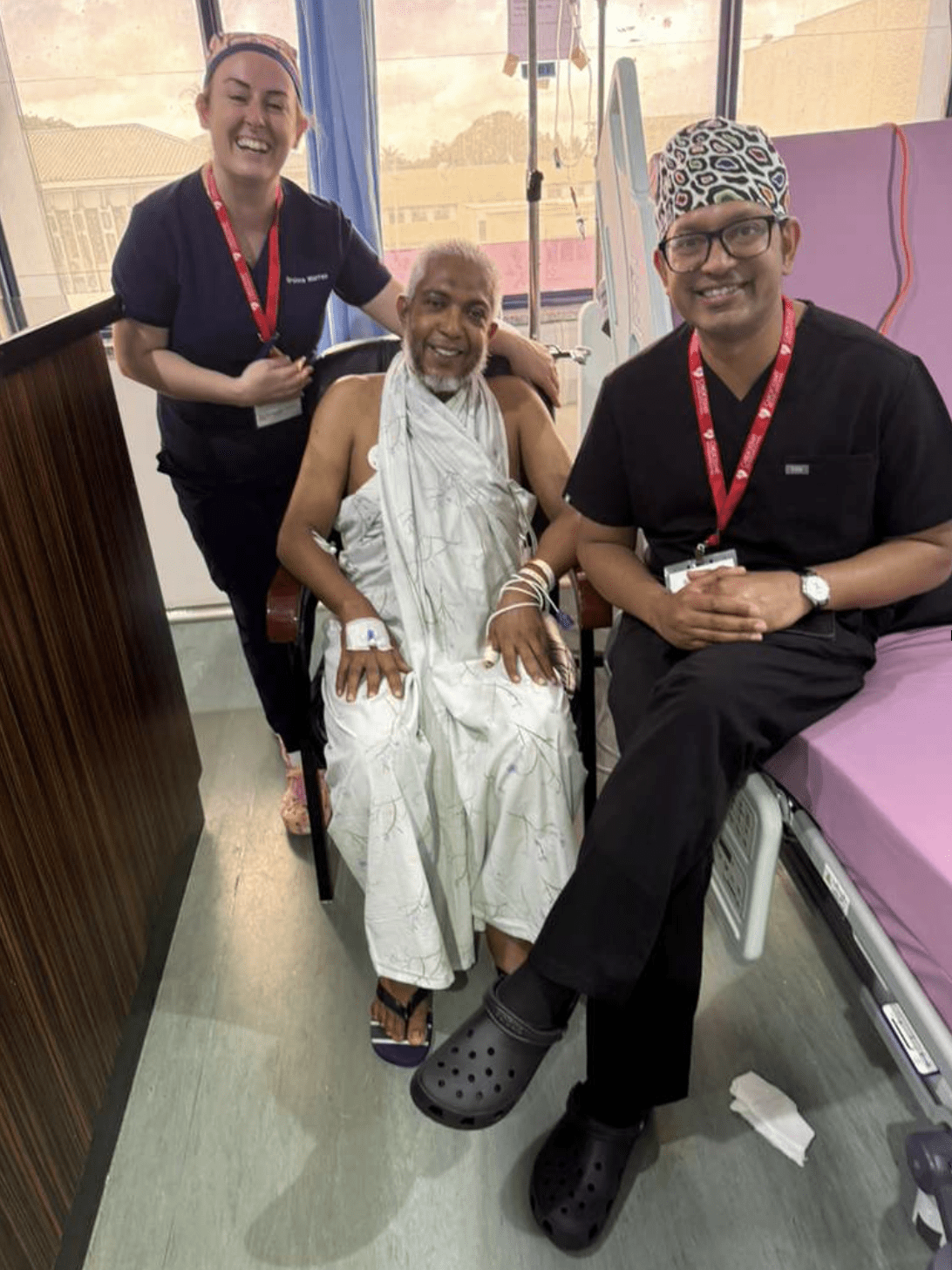
Cardiac Surgical Activity in Dar es Salaam
JKCI remains the sole cardiac institute in Tanzania and plays a vital role in providing cardiovascular care for the nation’s population of more than 65 million. The institute continues to face challenges related to resource limitations, staffing shortages, and inconsistent access to critical perioperative supplies. CardioStart’s ongoing presence supports the long-term development of a comprehensive, self-sustaining national cardiac surgical program.
Mission Activities
Day 1 (Friday, October 3rd)
The CardioStart team met with the local JKCI leadership and clinical teams. A formal surgical conference was held to review all patients scheduled for the upcoming week. Each patient’s pathology, operative plan, and level of complexity were discussed. Cardiac images, when available, were also reviewed. Along with the JKCI surgical team, a preliminary operative schedule was created. The team toured the ICU, operating theaters, perfusion areas, and wards; completed equipment checks; and organized supplies brought by CardioStart. In the evening, the team took part in a casual team-building activity in the city.
Weekend (October 4th–5th)
Patients scheduled for Monday and Tuesday were examined, consented, and prepared thoroughly. Imaging, lab results, and surgical risks were reviewed with the local staff. CardioStart team members took a day trip to Zanzibar for team bonding and morale boosting.
Operative Week (October 6th – October 10th)
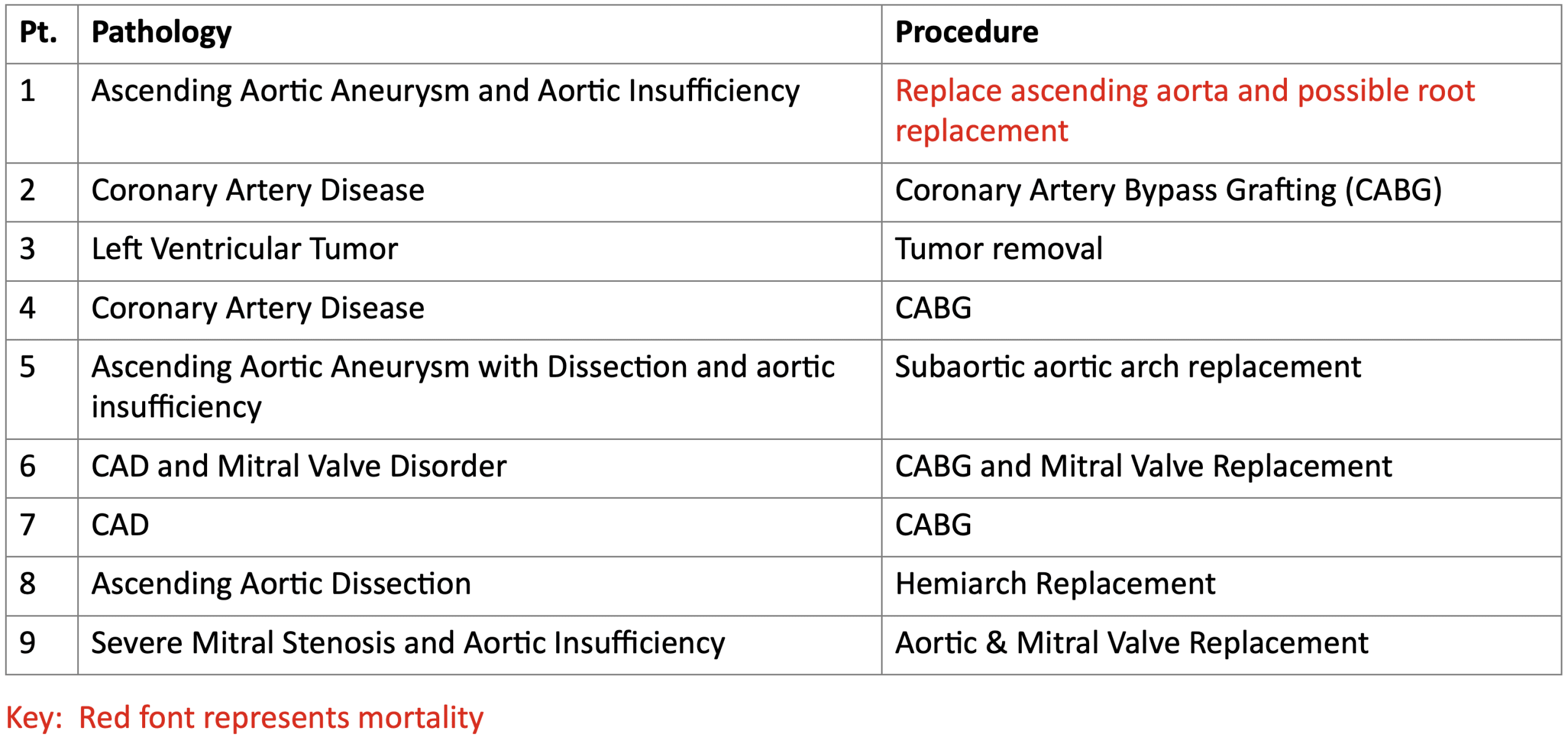
During the surgical week, the team performed two operations each day from Monday through Thursday. On Friday, only one operation was performed. The second scheduled case was canceled because the patient developed acute renal failure, rendering them unfit for surgery. A total of nine surgeries were completed. ICU monitoring and postoperative care were provided around the clock by the CardioStart ICU and critical care teams in collaboration with local staff.
OPERATIVE PROCEDURES:
(Patient details available upon request)
Adverse Outcomes
There was one mortality on Day 1 of the operative week. The patient underwent surgery but experienced hemodynamic collapse early in the postoperative period. The outcome was mainly due to severe resource constraints within the facility. Critical equipment and supplies, including cell saver, readily available PRBCs, and other essential intraoperative and postoperative support tools, were unavailable when urgently needed. Despite maximal efforts by both the CardioStart and JKCI teams, the lack of these essential resources significantly limited resuscitative capacity. This event highlights the urgent need for improved perioperative infrastructure and reliable availability of blood products and essential cardiac surgery adjuncts. There were no further mortalities.
Education
CardioStart board member and Emergency physician provided formal education in Basic Life Support (BLS), Advanced Cardiac Life Support (ACLS) including mega code stations, and ECG interpretation to local physicians and staff. Hands-on and didactic instruction was provided.
As per usual, CardioStart volunteers provide bedside education in their roles to expand multidisciplinary learning and cooperation in advanced care techniques.
Brain Protection Strategies in Aortic Surgery by Miro Peev, MD with moderator Dr. Moses Byomuganyizi.
Summary and Recommendations
This seventh mission successfully delivered complex cardiac surgery to patients who otherwise lacked access to care. The CardioStart team collaborated closely with JKCI staff in the operating room and ICU, providing direct clinical education, training in perioperative management, and exposure to modern cardiac care practices. We also offered comprehensive emergency medicine training to the local team and awarded certificates to all participants.
However, persistent systemic challenges continue to impact patient outcomes:
- Limited availability of blood products
- Absence of cell saver technology
- Inconsistent access to essential ICU equipment
- Resource shortages affecting intraoperative and postoperative care

Recommendations moving forward
- Strengthen blood bank processes and ensure availability of PRBCs and blood components.
- Acquire and maintain a functional cell saver system.
- Improve ICU hemodynamic monitoring resources.
- Continue joint clinical conferences and virtual pre-mission teaching.
- Expand opportunities for local staff to participate in international training initiatives.
Conclusion
The seventh CardioStart mission to JKCI advanced adult cardiac surgery in Tanzania by providing high-quality surgical care, improving local clinicians’ skills, and identifying critical system gaps that need addressing to enhance outcomes. Although the mission experienced a significant adverse event related to resource limitations, the overall collaboration between JKCI and CardioStart remained strong and productive. The progress achieved reflects the ongoing commitment of both teams to building a sustainable, high-level cardiac surgical program in Tanzania.
CardioStart Team
Mission Director: Miroslav Peev, M.D. (USA)
Team Coordinator: Calvin Adatsi, RN, APN (USA)
Cardiac Surgeons:
Miroslav Peev, M.D. (USA)
Ashok Venkataraman, M.D. (USA)
Anesthesiologist:
Kofi Vandyke, M.D. (USA)
Scrub Nurse:
Phoebe Turner, RN (Australia)
Perfusionists:
Mark Napoli, CCP (USA)
Ariyo Lookman Idowu, CCP (Nigeria)
Kim Bekker, CCP (USA)
ICU Nursing Team:
Young Jung, MSN, APN-C (USA)
Sariya Chayutipun, RN, NP (USA)
Kelly Ann Rose, RN, NP (USA)
Warren Grainne, RN (Ireland)
Intensivist/Cardiologist:
David Morrison, M.D. (USA)
Emergency Medicine Instructor:
Richard Harper, M.D. (USA)
Database
Calvin Adatsi, RN, APN (USA)
In Gratitude
Kofi Vandyke, MD for invasive lines provided.
Richard Harper, MD expenses associated with education materials purchase and carriage.
Cryolife Inc./Artivion-vital surgical products.
Terumo-Graft donation
Mark Napoli, generous perfusion supplies
Southtowne Rotary, Eugene, OR for teams’ response to sterile disposable products needed for the mission.
Ms. Pam Harned, Abbott Inc. for donation of valve conduits.
Methodist Church Lake Oswego Sewing group for heart pillows for chest splinting.


